
EUR/CHF recovers back to 1.05 level, but yet to break out of bearish trend
- EUR/CHF recovered on Tuesday amid strong Eurozone PMIs and hawkish ECB commentary.
- The pair’s recovery to 1.05 doesn’t yet signal the end of the recent bear trend.
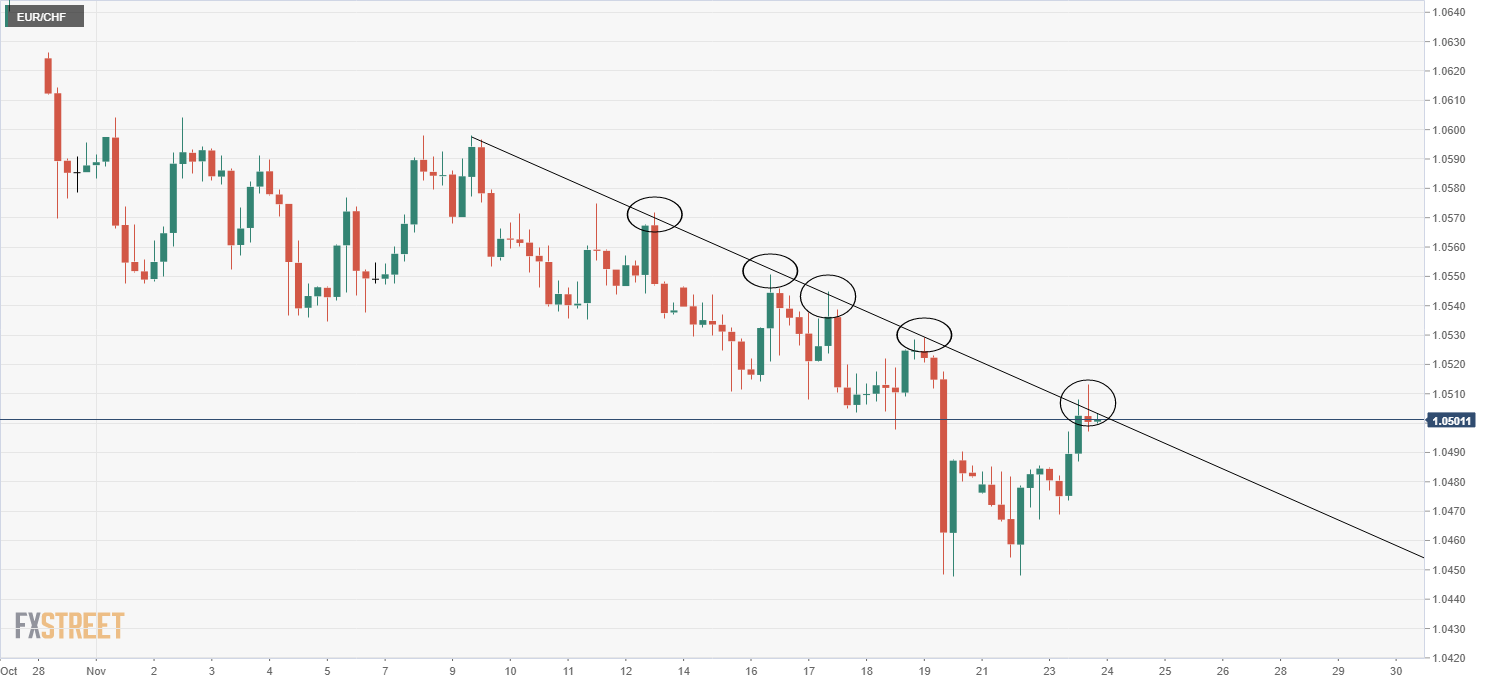
Stronger than expected Eurozone PMIs and the hawkish tone comments made by influential ECB governing council member Isabel Schnabel helped the euro outperform its G10 peers on Tuesday. That helped pushed EUR/CHF 0.3% higher and back to the 1.05 handle. Much was made of a decisive break below the 1.05 level last Friday that saw the pair post multi-year lows around 1.0450. This is a level that has previously been vigorously defended by the SNB.
EUR/CHF is yet to break to the north of a downtrend that has been suppressing the price action since mid-November, however, implying the latest recovery could be little more than a dead cat bounce. The next key area of historic support is just under 1.0250.
Historic Weakness
The recent run of EUR/CHF weakness, which has seen the pair lose more nearly 3.0% since the end of August, is historically significant. The pair is down slightly more than 1.5% in the last 21 sessions, which ranks in the bottom decile when compared to the rolling 21 session percentage changes over the last five years. A better demonstration of the historic significance of EUR/CHF’s recent weakness is that it is 1.8% below its 50DMA and nearly 3.5% its 200DMA, scores which rank in the bottom 4th and 2nd percentiles respectively versus the last five years.
What next?
Driving the recent run of losses that has taken the pair back to fresh multi-year lows has been a combination of factors including faster inflation in the Eurozone versus Switzerland and a deterioration in the Eurozone’s pandemic outlook this winter. If inflation differentials have been a major factor continuing to drive EUR/CHF lower, then more downside may lay ahead if ECB’s Isabel Schnabel was correct in her assessment on Tuesday that the ECB risks missing its medium-term inflation remit. Equally, it might reasonably be argued that if the bank heeds her accompanying call for a wind-down in stimulus after the PEPP expires in March, central bank divergence may come to the pair’s aid. After all, the SNB is not expected to shift from its ultra-dovish stance any time soon.