
When are the UK data releases and how could they affect GBP/USD?
The UK Economic Data Overview
The British economic calendar is all set to entertain the cable traders during the dull hours of early Friday, at 06:00 GMT with May GDP figures for 2021. Also increasing the importance of that time are Trade Balance and Industrial Production details for the stated period.
Having witnessed a 2.3% run-up of economic activities in the previous month, market players will be interested in May’s monthly GDP figures to confirm the economic transition amid the covid resurgence fears.
Forecasts suggest that the UK GDP will ease to 1.4% MoM in May versus +2.3% prior. GBP/USD traders also eye Index of Services (3M/3M) for the same period, forecast +7.3% versus +1.4% prior, for further insight.
Meanwhile, Manufacturing Production, which makes up around 80% of total industrial production, is expected to recover from -0.3% to +1.0% MoM in May. Further, the total Industrial Production is expected to come in at +1.5% MoM versus the previous reading of -1.3%.
Considering the yearly figures, the Industrial Production for May is expected to have eased to +21.6% versus +27.5% previous while the Manufacturing Production is also anticipated to have risen by 29.5% in the reported month versus 39.7% last.
Separately, the UK Goods Trade Balance will be reported at the same time and is expected to show a deficit of £5.976 billion versus a £5.549 billion deficit reported in March.
Deviation impact on GBP/USD
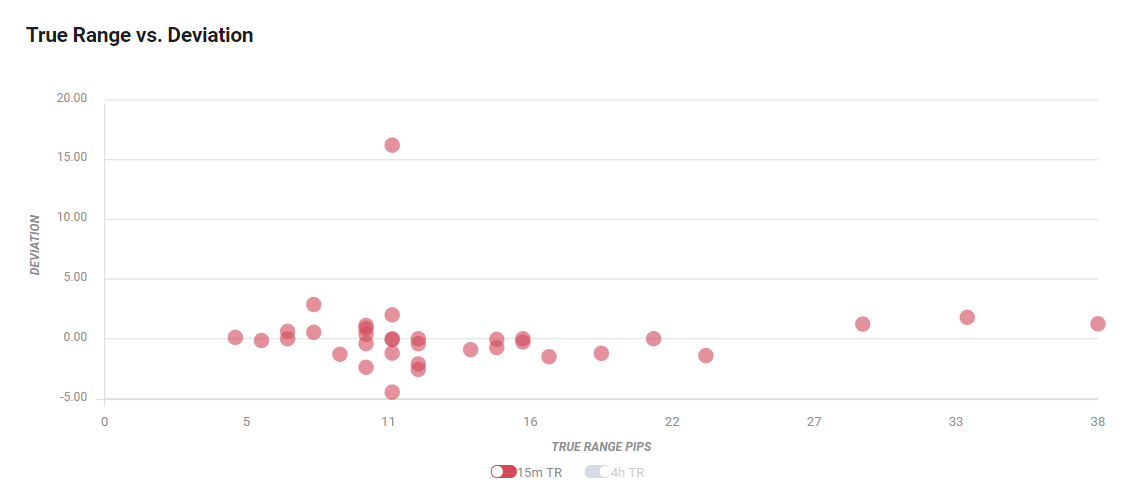
Readers can find FX Street's proprietary deviation impact map of the event below. As observed the reaction is likely to remain confined around 20-pips in deviations up to + or -2, although in some cases, if notable enough, a deviation can fuel movements over 60-70 pips.
How could affect GBP/USD?
GBP/USD remains heavy for the fourth consecutive day heading into Friday’s London open, down 0.07% around 1.3775. While the coronavirus (COVID-19) woes put a safe-haven bid under the US dollar and weigh on the quote, Brexit headlines recently dragged the cable. The EU-UK tussles over the Brexit bill are the latest threat to the departure talks among the ex-neighbors.
Given the latest covid resurgence and variant fears in the UK, today’s British data dump will be the key to gauge the economic recovery. Moving on, the UK data will offer additional clues to the tapering chatters but are less likely to move the GBP/USD much as the markets are more interested in Brexit and the covid headlines of late. Even so, upbeat data could propel towards breaking the 1.3865 immediate hurdle.
Ahead of the release, TD Securities said,
We look for UK GDP to post a modest 1.2% m/m gain in May (market 1.8%), at least relative to the >2% gains we saw in the prior two months. After indoor dining and hotels reopened from 17 May, we look for the accommodation and food services sector to be the big driver with around a 30% m/m gain, pushing the level of activity to slightly above that of Sept 2020, but not quite as strong as the EOHO-fuelled level from Aug 2020. On the downside, we know that retail sales declined m/m in May, so we look for the retail/wholesale sector to subtract from GDP growth in May. Overall, we should see the level of GDP reach a new post-pandemic peak in May, sitting about 3% short of its level in January 2020.
Technically, a clear downside below a five-month-old support line directs GBP/USD prices towards the 200-DMA level surrounding 1.3670. On the contrary, corrective pullback needs to overcome a descending resistance line from June 23, around 1.3865.
Key notes
GBP/USD struggles around 1.3800 amid Brexit, coroanvirus fears, focus on UK data dump
GBP/USD Forecast: Lower lows hint at further declines
About the UK Economic Data
The Gross Domestic Product released by the Office for National Statistics (ONS) is a measure of the total value of all goods and services produced by the UK. The GDP is considered as a broad measure of the UK economic activity. Generally speaking, a rising trend has a positive effect on the GBP, while a falling trend is seen as negative (or bearish).
The Manufacturing Production released by the Office for National Statistics (ONS) measures the manufacturing output. Manufacturing Production is significant as a short-term indicator of the strength of UK manufacturing activity that dominates a large part of total GDP. A high reading is seen as positive (or bullish) for the GBP, while a low reading is seen as negative (or bearish).
The trade balance released by the Office for National Statistics (ONS) is a balance between exports and imports of goods. A positive value shows trade surplus, while a negative value shows trade deficit. It is an event that generates some volatility for the GBP.