WTI finds support at $65.50 ahead of API
- Crude oil prices prolong the rejection from recent tops.
- WTI rebounds from daily lows in the $65.50 region.
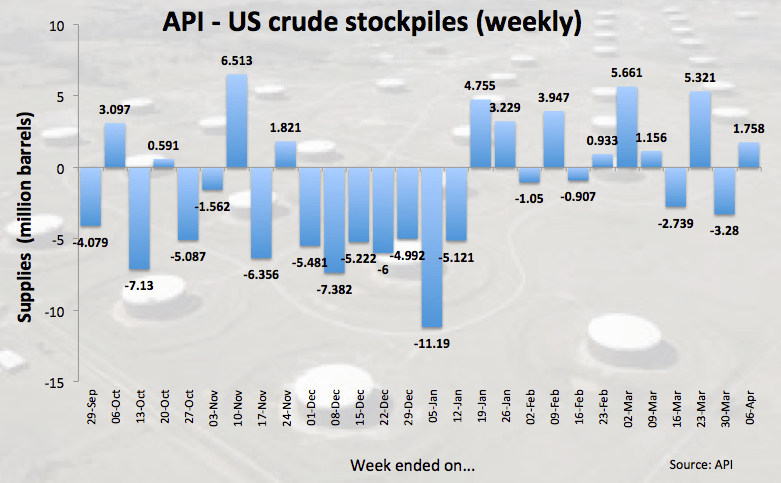
- Weekly report on US crude oil supplies by the API next on tap.
Prices of the barrel of WTI are extending the weekly leg lower on Tuesday, currently hovering over the low-$66.00s after bottoming out near $65.50.
WTI attention to US supplies
Prices of the American benchmark for the sweet light crude oil are intensifying the negative start of the week, losing ground for the second session in a row and receding further from last week’s 3-year tops in the $67.70 zone.
Shrinking geopolitical concerns in the Middle East also removed tailwinds from the recent strong upside in crude oil, allowing the ongoing retracement in prices and opening the door to extra downside in the near term.
However, volatility is expected to remain high around crude oil, in light of fears over a US-China trade war, shrinking crude oil output in Venezuela, potential US sanctions against Iran and headlines citing the probability of an extension of the OPEC/non-OPEC production cut deal.
Later in the session, the American Petroleum Institute will publish its report on US crude oil supplies ahead of tomorrow’s DoE’s report and the oil rig count due on Friday.
WTI significant levels
At the moment the barrel of WTI is down 0.26% at $66.17 and a breakdown of $65.11 (10-day sma) would expose $64.70 (21-day sma) and finally $61.77 (low Apr.6). On the other hand, the next hurdle aligns at $67.72 (2018 high Apr.13) followed by $69.66 (monthly high Dec.2014) and finally $70.00 (psychological level).