
When are the UK Jobs and how could they affect GBP/USD?
UK Jobs report overview
The UK labor market report is expected to show that the number of people seeking jobless benefits increased by 5.0k in the three months to March, compared to a rise of 9.2k booked in the three months to February. The unemployment rate is expected to hold steady at 4.3% during the period.
Average weekly earnings, including bonuses, in the three months to Feb are expected a tad higher at 3.0%, while ex-bonuses also, the wages are seen edging higher to 2.8% in the reported period.
Deviation impact on GBP/USD
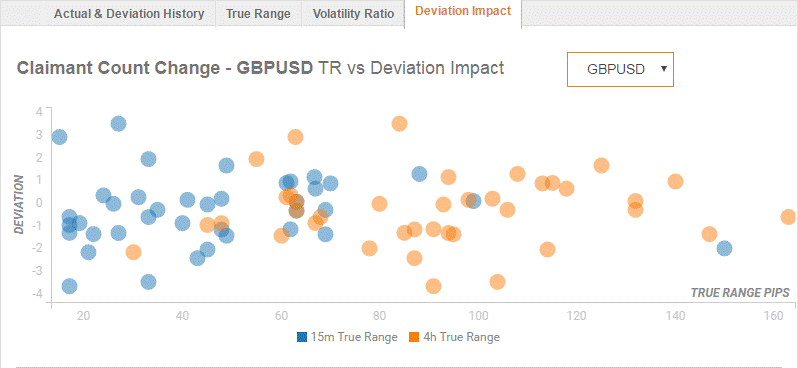
Readers can find FX Street's proprietary deviation impact map of the event below. As observed the reaction is likely to remain confined between 20 and 60 pips in deviations up to 2 to -4, although in some cases, if notable enough, a deviation can fuel movements of up to 85 pips.
How could affect GBP/USD?
A bigger-than-expected rise in the UK’s average earnings could add extra legs to Cable’s rally, driving the rates back above the 1.44 handle. On a disappointing result, we could see the GBP/USD pair dropping towards 1.4300 support area.
Yohay Elam, Analyst at FXStreet, notes, “if it comes out lower than expected at a deviation of -0,48 or less, the GBP/USD may up reaching a range of 44 pips in the first 15 minutes and 85 pips in the following 4 hours. A fall from the $1.4345 battle line would send the pair back to the late-March high of $1.4245. The next level to watch is $1.4150 which was a swing high in February. Another February high at $1.4070 is the next level to watch.”
Key Notes
GBP/USD sits and waits for UK jobs, earnings figures
UK labour data amongst market movers today – Danske Bank
BOE seen hiking rates just once in 2018 – Bloomberg survey
About UK jobs
The Claimant Change released by the Office for National Statistics (ONS) presents the number of unemployment people in the UK. There is a tendency to influence the GBP volatility. Generally speaking, a rise in this indicator has negative implications for consumer spending which discourage economic growth. Generally, a high reading is seen as negative (or bearish) for the GBP, while a low reading is seen as positive (or bullish).